
How to Choose a Dash Camera for Your Fleet in Qatar
Fleet managers usually start this conversation by asking which dash camera is best. It is the wrong first question, and it leads to buying more camera than the job needs or less camera than the problem requires.
The right first question is: what dispute keeps costing you money? Answer that, and the specification writes itself.
Work backwards from the incident
Almost every fleet camera requirement in Qatar traces back to one of five situations. Find yours.
1. “Our driver is blamed for collisions he did not cause”
You need the road ahead, recorded continuously, with the clip preserved when something happens. A single road-facing 4G camera solves this. Anything more is money spent on a different problem.
2. “Something happens in the cab and we only hear about it afterwards”
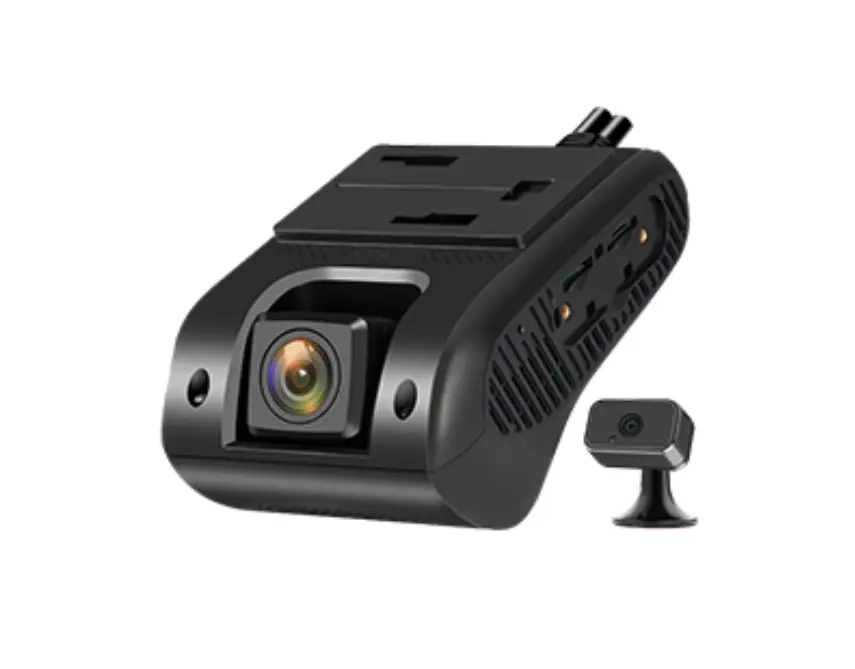
Passenger transport, taxis, staff buses. You need a second view of the cabin, with infrared so it works after dark. Either a dual-lens unit or a road camera plus a cabin camera.
3. “Cargo goes missing between depots”
The camera has to be outside the cabin and weather-rated, pointed at the load or the door. This is an external IP67 camera added to a recorder, not a bigger windscreen unit.
4. “We clip things when manoeuvring”
Low-speed damage is the most frequent and most disputed incident type in urban fleets. It is a side and rear coverage problem — blind-spot cameras — and no amount of forward-facing resolution fixes it.
5. “Our incidents cluster at the end of long shifts”
That is fatigue, and it is the one case where the camera is not really there to record. Driver monitoring warns the driver in the cab at the moment attention drops. The recording is secondary; the audible alert is the product.
The three specifications that actually matter
Channels. How many views do you need at once? One (road), two (road and cabin), or several (road, cabin, sides, rear, cargo). This is the single biggest cost driver, and the easiest to over-buy.
Connectivity. A 4G camera streams live and uploads event clips by itself. A camera without it needs someone to physically collect footage, which in practice means footage is collected after an incident, from a vehicle that may be two hours away, if the card has not already been overwritten.
AI features. ADAS watches the road and warns about lane departure and closing distance. DMS watches the driver and warns about fatigue, distraction and phone use. Both matter most on long monotonous runs. Neither is worth paying for on a van doing twenty short urban drops a day.
Things that sound important and are not
Maximum resolution. A correctly aimed 1080p camera beats a badly aimed 4K one every time, and the 4K file costs more to store and upload. Aim is worth more than pixels.
Storage size in isolation. What matters is whether the clips you need survive long enough to be requested. That is a function of channels, frame rate, resolution and how the device handles event files — not of the card size on the box.
A screen in the cab. Nice in a demonstration. In daily use, the alert the driver hears matters and the screen does not.
The part nobody quotes for
Installation quality decides whether any of this works.
A camera mounted where the bracket fits rather than where the lens sees is a camera that records a headlining. A cabin camera aimed without anyone sitting in the seat records a headrest. An infrared camera never checked after dark is an unknown until the night you need it.
We aim every camera on the live view before the vehicle leaves, with a person in the monitored position, and verify night performance rather than assume it. It adds a few minutes per vehicle. It is the difference between footage that settles a dispute and footage that shows nothing.
A sensible way to buy
Fit a first batch. Use the platform for a few weeks. Find out which reports your supervisors actually open and which alerts they actually act on. Then complete the rollout with a configuration you have proven on your own vehicles.
That sequence costs nothing extra and it consistently produces a system people use. Fleets that specify everything up front, from a brochure, usually end up paying for channels they never watch.
Where to look next
The range we install runs from the compact JC120 through the dual-lens JC261P to the multi-channel JC450 Series, with JC170 for standalone driver monitoring. The full list is on the dash cameras page, and the accessory cameras that extend them are under accessories.
Tell us the vehicles and the dispute, and we will recommend a device and quote the installation — including when a cheaper one answers your question just as well. Call 4421 2322 or email info@pixelsqa.com.