
GPS Tracking for Construction Equipment in Qatar: Why a Vehicle Tracker Will Not Do
The generator was on the plot on Thursday afternoon. On Saturday morning it was not. Nobody saw a lorry, the site had no fence yet, and the only record of the machine is a line on a hire agreement and a photograph somebody took by accident.
This is the most common way plant disappears in Qatar, and it is why GPS tracking for construction equipment in Qatar is a different purchase from tracking a fleet of vans — different hardware, different mounting, different expectations.
Why a vehicle tracker is the wrong device for an excavator
A standard vehicle tracker is wired to the battery and wakes with the ignition. That design assumes three things which are all false on a construction site.
There is no reliable power
A compactor, a tower light, a fuel bowser or a cable drum has no battery to wire into. Even on machines that do, a unit drawing from the battery will flatten a machine that sits unused for three weeks — and the plant that sits unused is exactly the plant that gets taken.
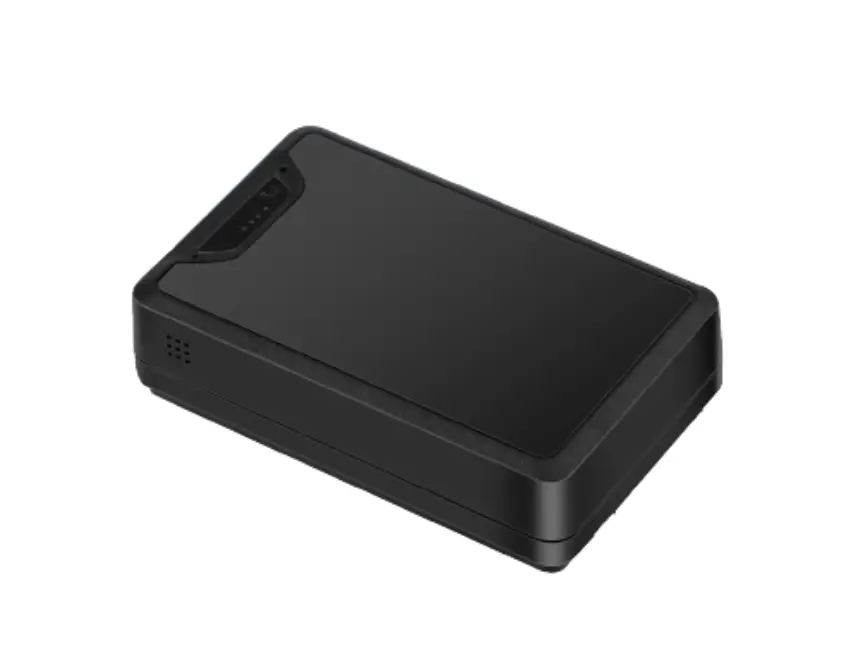
Asset trackers for this job are self-powered and report on a schedule rather than continuously. That single design difference is what makes battery life measured in years rather than days.
It must not be easy to find
A tracker plugged into an OBD port takes four seconds to remove. An asset tracker is meant to be fitted somewhere a person in a hurry will not look, magnetically or bolted, with no cable leading to it. If your supplier mounts it where it is convenient for them to install, you have bought a device that will leave with the machine.
It moves between sites, not along roads
Vehicle reports are built around trips, speed and driver behaviour. None of that is meaningful for a generator. What matters is: is it where it is supposed to be, and did it move outside working hours?
What actually gets taken
In our experience the losses are rarely the largest machines — an excavator is hard to move quietly. It is the middle tier:
- Portable generators and welding sets
- Plate compactors, breakers and small plant that two men can lift
- Cable drums and copper
- Fuel bowsers — sometimes for the bowser, usually for what is in it
- Tower lights, left on a plot between phases
These items share a profile: valuable, portable, rarely marked, and nobody notices for days.
Geofencing on a site that keeps changing shape
Geofencing on a construction site is not the same as drawing a circle round a depot. The site boundary moves as phases progress, machines are moved legitimately between plots, and a fence drawn too tightly generates alerts every day until somebody mutes them.
What works: a generous boundary around the whole project, plus a rule based on time rather than place — movement outside working hours is the alert worth waking someone for. A machine crossing a plot at 10 a.m. is work. The same machine moving at 1 a.m. on a Friday is not.
Battery life is the whole specification
Ask how often the device reports, and then do the arithmetic yourself. A tracker reporting once an hour and one reporting every ten minutes are not the same product, even when the datasheet quotes the same battery.
For plant that stays on one site for months, a few reports a day is usually enough to answer “is it still there” — and it buys years of life. For high-value items that move weekly, choose a shorter interval and accept the replacement cycle. Decide per asset class, not for the whole yard.
The Qatari climate belongs in this conversation too. A sealed unit bolted to a machine that stands in full sun all summer is in a harsher environment than the same device in a van. Ask what the enclosure is rated for and where exactly it will be mounted.
GPS tracking for construction equipment in Qatar: what to ask a supplier
- How long does this battery last at the reporting interval we need — not the best case?
- Where will it be mounted on this specific machine, and can it be found in under a minute?
- Can I set an alert on movement outside working hours, not just on leaving a boundary?
- What happens to the record when the machine is inside a basement or a steel shed?
- How do I get a location history out of the system in a form I could hand to the police?
- Who owns the data if we change supplier?
Do the boring part before the theft, not after
A tracker tells you where something went. It does not prove the machine is yours. Before anything is stolen, have for each asset: the serial or chassis number, a photograph showing that number, the purchase or hire document, and the tracker’s device ID recorded against it.
Reports of stolen property in Qatar go to the Ministry of Interior, and the difference between a report that can be acted on and one that cannot is usually that paperwork — not the tracking. Prepare it once, keep it with the asset register, and the tracker becomes useful evidence instead of an interesting map.
Where to start
Send us a list of what you want to protect and roughly what each item is worth, and tell us whether the plant stays on one site for months or moves weekly. That decides the device, the reporting interval and the mounting. We survey, fit, and tell you plainly which items are not worth tracking.
More on the devices on our asset trackers and GPS tracking pages, on vehicles in vehicle trackers, and on fuel losses in fuel theft prevention for fleets in Qatar. Or talk to us.