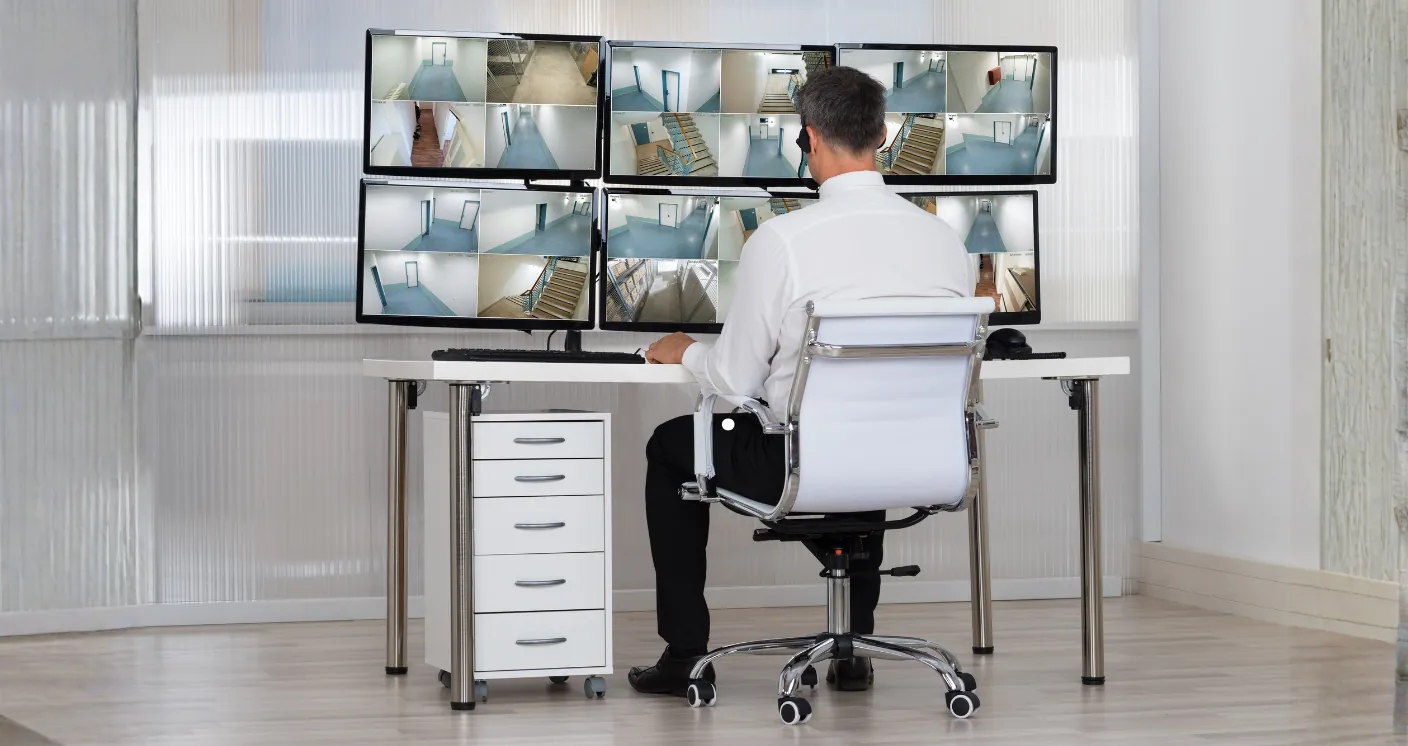
CCTV Installation in Qatar, Designed Around What You Must See
Pixels Technology provides end-to-end CCTV solutions, from high-definition camera installation and smart analytics programming to continuous maintenance. Our systems guarantee reliable 24/7 monitoring and asset protection.
IP CCTV Systems
Offering superior digital image quality and flexible integration over existing network infrastructure for scalable and centralized management.
Analog HD Systems
Providing reliable, cost-effective high-definition surveillance with minimal latency, ideal for upgrading older systems without complex cabling.
Smart Analytics & VMS
Integrating Video Management Software (VMS) with AI features like facial recognition, object tracking, and instant threat detection.
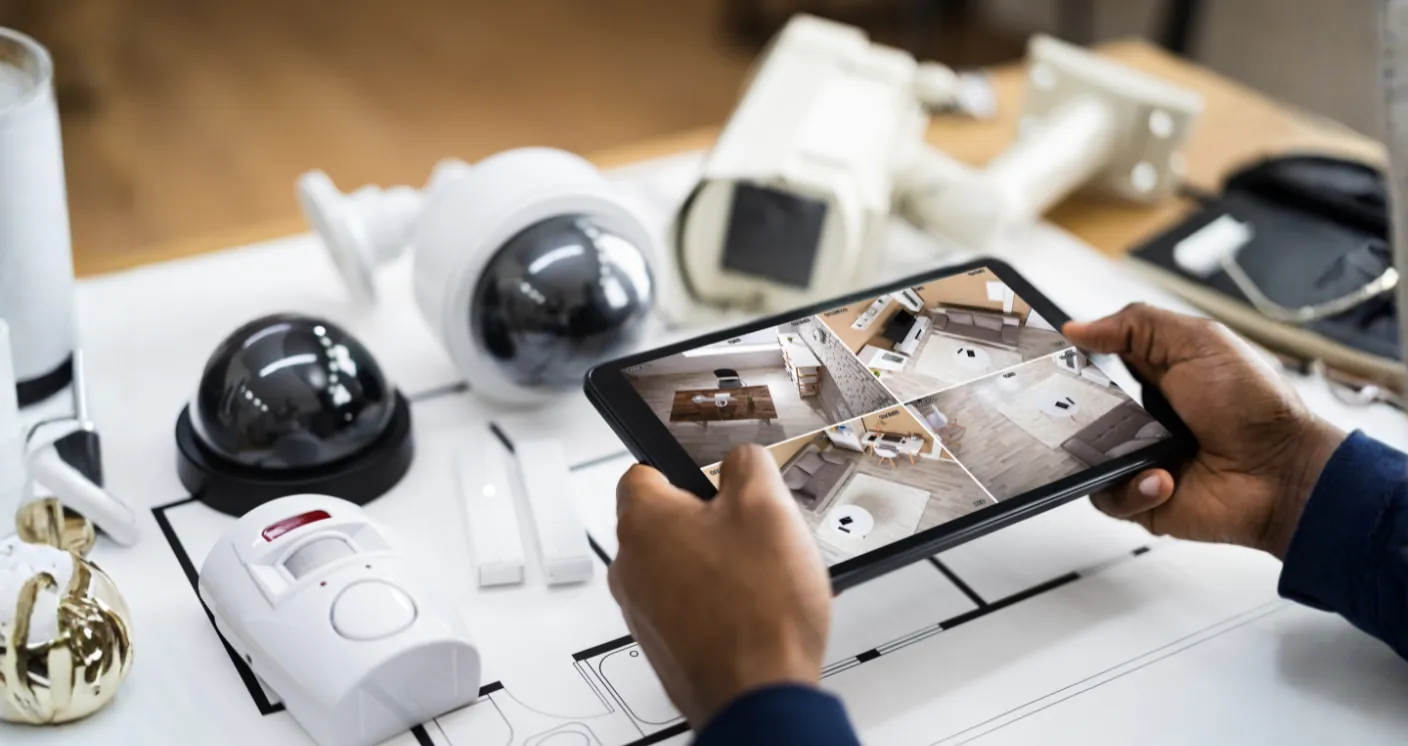
Our End-to-End CCTV Installation Process
We manage the entire lifecycle of your security project, ensuring flawless execution from initial assessment to final system handover and post-installation support.
- Site Security Assessment
- Custom System Design
- Certified Installation & Programming
- Training and Handover
Working Hours
Sat – Wed: 8:00 AM – 5:00 PM
Thursday: 8:00 AM – 5:00 PM
Friday: Closed

Call to ask any question
44212322
CCTV installation in Qatar, designed around what you actually need to see
Most CCTV disappointments in Qatar come from the same place: cameras bought by the box rather than designed around the site. A camera pointed at a gate from forty metres away will show you that a car arrived. It will not show you the plate, the face, or who opened the door. Pixels Technology designs CCTV systems in Qatar around the questions you need answered, then installs, configures and maintains them from our office in Doha.
We work on villas, offices, warehouses, retail units, labour accommodation, schools and construction sites. The equipment differs in each case, but the method does not: survey first, agree what each camera must achieve, then specify.
What a Pixels CCTV system includes
Cameras chosen per position
- Turret and dome cameras for entrances, corridors, receptions and retail floors, where a discreet fixed view is enough.
- Bullet cameras for perimeters, car parks and yards, where a longer, narrower view matters more than a wide one.
- PTZ cameras for large open areas such as compounds and sites, where an operator or a preset tour needs to cover ground a fixed camera cannot.
- Varifocal lenses where the distance to the subject makes the difference between an image and evidence.
Resolution is chosen the same way. A 2MP camera covering a doorway at three metres identifies a face. The same camera covering a loading bay at twenty five metres does not, and no amount of digital zoom will fix it after the event.
Recording and storage
Footage is recorded to an NVR or DVR sized for the number of cameras, the resolution, the frame rate and the number of days you need to keep. Surveillance-grade drives are used because desktop drives are not built to write continuously for years. We tell you at design stage how many days of retention the proposed storage actually gives, rather than quoting a number that assumes nothing ever moves in front of a camera.
Network and power
IP cameras are powered over the same cable that carries their video, using PoE switches with enough budget for every camera plus headroom. Cabling is installed to the same standard as our structured cabling work: terminated properly, labelled at both ends, and tested rather than assumed.
Viewing
You see the cameras on a monitor at the site, on a computer, and on your phone. Remote access is set up during handover and tested on your own device before we leave, so it works when you need it and not only on the installer’s laptop.
Analog HD or IP, and how to choose
If a building already has coaxial cable running to every camera position, an analog HD system usually delivers more image for the money, because the expensive part, the cabling, is already installed. If the site is new, or the cabling is being replaced anyway, IP is the better long-term choice: higher resolutions, one cable for power and video, easier expansion and better analytics. We install both and will tell you which one your building actually favours.
Smart analytics, used where they earn their keep
Analytics are useful when they reduce the amount of footage a human has to watch. The ones that consistently pay for themselves are line crossing on a perimeter, intrusion detection in an area that should be empty after hours, and people counting at an entrance. Motion recording on every camera is a false economy in a country with this much wind-blown dust and this many palm trees moving in front of lenses, so we tune detection zones and sensitivity per camera rather than switching it on globally.
Sites we design for
- Villas and compounds: gate, driveway, entrance doors and perimeter, with recording kept out of sight and remote viewing for the family.
- Offices: reception, server room, entrances and the paths between them, integrated with access control where it exists.
- Warehouses and yards: loading bays at a resolution that reads a plate, aisles for stock movement, and wide coverage of the yard itself.
- Retail: tills, entrances and stock areas, positioned so hands and faces are both visible.
- Construction sites: gates, material stores and plant compounds, with equipment that tolerates dust and heat and can be relocated as the site develops.
- Schools and accommodation: entrances, corridors and common areas, with careful attention to where cameras must not point.
If your premises fall under a licensing or approval requirement in Qatar, tell us at the survey stage. Coverage, retention and image quality can be designed to meet a specific requirement much more easily before the system is installed than afterwards.
How much storage do you actually need?
Retention is the question clients ask last and regret first. The honest answer depends on four things: how many cameras, at what resolution, at what frame rate, and whether they record continuously or on event. As a rule of thumb, a 4MP camera recording continuously at a sensible bitrate consumes a few hundred gigabytes a month. Eight of them, kept for thirty days, no longer fit on a single small drive. We calculate this for your specific design and put the number in the proposal, so the first time you go looking for footage from three weeks ago it is still there.
How an installation runs
Survey. We walk the site with you, agree what each camera must achieve, and note the practical details: where cable can run, where power exists, what is in shade at noon and what stares into the sun at five.
Design and quotation. You receive a camera-by-camera layout, the recorder and storage that supports it, the network equipment, and the installation work, itemised.
Installation. Cabling is run and terminated, cameras are mounted and aimed, the recorder is configured and the system is tested camera by camera in daylight and at night.
Handover. We set up viewing on your devices, show your team how to export footage for an incident, and leave documentation of what is where.
Maintenance. Cameras in Qatar need cleaning. Dust films a lens within months, and a dirty camera at night is a useless camera. We offer scheduled maintenance that covers lens cleaning, aiming checks, firmware updates, recorder health and a test of the footage export path.
Working with your other systems
CCTV rarely stands alone. The same team installs attendance and access control systems, so the door that a camera watches can also record who opened it, and vehicle tracking, so the truck leaving the yard on camera is the same vehicle you can follow on the map. For distributed sites, the IPTV and SMATV infrastructure often shares the same cabling and racks.
Frequently asked questions
How many cameras does a villa need?
Most villas are covered properly by between four and eight cameras: the gate, the driveway, the main door, the rear access and one or two overviews. More cameras badly placed are worse than fewer cameras placed well.
Can I watch the cameras from outside Qatar?
Yes. Remote viewing works anywhere with an internet connection, through a mobile app or a browser. We configure it during handover and test it with you.
Will the system work during a power cut?
Only if it is on a UPS. We size and quote a UPS for the recorder, switch and internet equipment when continuity matters, which for most commercial sites it does.
Do cameras record sound?
Some models can. Audio recording carries privacy obligations, so we only enable it when it is appropriate and when you ask for it.
How long does installation take?
A villa is usually one to two days. An office floor or warehouse depends on cable routes more than on camera count, and we give a realistic schedule after the survey rather than an optimistic one before it.
Can you add cameras to an existing system?
Often, yes. It depends on the recorder’s spare channels, the storage and whether the existing cabling can be extended. Send us the model of your recorder and we will tell you what it will take.
Who owns the footage?
You do. The recorder is yours, the drives are yours, and we do not keep copies. If you need us to retrieve footage for an incident, we will help you export it.
What happens if a camera fails?
Cameras are covered by warranty. With a maintenance agreement we monitor recorder health and replace failed units quickly, because the camera that fails is invariably the one you needed that week.
Ask for a site survey
Tell us the building and what worries you, and we will survey it and propose a system that answers that specific worry. Call 4421 2322 or 6624 0400, email info@pixelsqa.com, or use the contact page. Saturday to Thursday, 8:00 AM to 5:00 PM, Al Mirqab Mall, Block B, Second Floor, Office 205, Doha.
What we would install, by building type
A villa in Doha
Six cameras is the usual answer: the gate at a resolution that reads a plate, the driveway, the main entrance, the rear or service door, and two overviews of the garden and boundary. The recorder goes somewhere discreet rather than in the entrance hall, with storage for thirty days. Remote viewing is set up on the family’s phones, and the night performance of every camera is checked after dark, because that is when a villa system earns its money.
An office floor
Reception, the lift lobby, the server room door, the main corridor and the emergency exit. Cameras are placed so faces are captured at head height rather than the tops of heads from a ceiling corner. The recorder sits in the comms rack, on the UPS, cabled with the rest of the structured cabling, and access is given to the office manager and to whoever covers out of hours.
A warehouse and yard
Loading bays at a resolution that identifies people and plates, aisles for stock movement, the gate, and wide coverage of the yard. Lighting is part of the design here: a camera cannot record what is not lit, and adding a floodlight is often cheaper than upgrading a camera. Retention is usually longer, because stock discrepancies are discovered weeks later.
A construction site
The gate, the material store, the plant compound and the site office, with equipment rated for dust and heat and mounted so it can be relocated as the site changes shape. Connectivity is usually 4G rather than fixed line, and power comes from the site supply with protection against the interruptions that come with it.
Image quality is a chain, not a camera
Clients often ask for more megapixels when the problem is somewhere else in the chain. Resolution only helps if the lens covers the right field of view, the scene is lit, the frame rate is high enough for movement, the bitrate is not throttled, and the recording is not being over-compressed to save disk. A 4MP camera correctly specified will beat an 8MP camera squeezed onto inadequate storage every time. We set the whole chain during commissioning and show you sample footage from each camera, day and night, before handover.
What CCTV in Qatar has to survive
Heat, dust, humidity near the coast, and the occasional downpour that finds every unsealed connector in a building. Housings are chosen for the position rather than for the price list, cable entries are sealed downward, and outdoor units get sunshields where they face the afternoon sun. Inside, recorders need ventilation: a recorder in a sealed cupboard in August is a recorder with a shortened life and a drive that will fail at the worst moment.
Budget, and where it is worth spending
Three items move the cost of a CCTV system: the number of cameras, the specification of the cameras that matter most, and the storage. Our advice is consistent. Do not spread the budget evenly. Spend on the two or three positions that must produce evidence, use sensible cameras elsewhere, and never economise on storage, because a system that only keeps five days will one day be asked for footage from ten days ago. Cabling is the third place not to economise: it will outlive two generations of camera.
Upgrading an existing system
If you already have cameras, we can assess what is worth keeping. Existing coaxial cabling often supports a straightforward upgrade to modern analog HD cameras at a fraction of the cost of recabling. Where the recorder is the weak point, replacing it alone can add retention and remote viewing without touching a single camera. We will tell you which of those applies to your building after a survey, and we are happy to say that most of your system is fine when that is the truth.
Privacy, and where cameras should not point
A CCTV system that ignores privacy creates a problem for its owner. Cameras belong on entrances, circulation areas, storage, cash handling points and perimeters. They do not belong in bathrooms, changing areas, prayer rooms or accommodation bedrooms, and they should not be aimed into a neighbour’s property or across a boundary into a public space more than the view requires. We raise this at survey, adjust angles where a view oversteps, and use privacy masking on the recorder where part of a camera’s field has to be excluded.
Signage matters too. People should know they are being recorded before they are recorded, and a simple notice at each entrance covers it. Access to footage should be limited to the people who need it, with a record of who exported what and why. Qatar’s personal data protection law applies to camera footage of identifiable people, and treating footage as a controlled asset rather than a shared folder keeps you on the right side of it. We configure operator accounts accordingly, so the receptionist who needs live view does not automatically get export rights to three months of archive.
Can you integrate cameras with an alarm or intercom?
In most cases yes, through the recorder inputs or over the network, so an alarm event marks the footage and can trigger a notification. Tell us what equipment you already have and we will confirm what is practical before quoting.
How soon can you start?
After the survey we give you a real date. Small villa and office installations usually start within days of approval, larger projects are scheduled around the building programme.
LOCATION
Doha, Al Mirqab Mall Block B, 2nd floor, office 205
WORKING HOURS
Sat – Thu: 8:00 AM – 5:00 PM
Friday: Closed
CONTACT
info@pixelsqa.com
44212322 - 66240400