
Access Control and CCTV for Labour Accommodation in Qatar: What Actually Matters
A labour accommodation compound is not a large office, and the security design that works in an office fails here on the first morning. Four hundred men leave through one gate inside twenty minutes. Contractors and delivery vans arrive unannounced. Kitchens, stores and laundry rooms are shared by hundreds of people who did not choose each other as neighbours.
Getting access control and CCTV for labour accommodation in Qatar right is less about buying better cameras than about deciding, in advance, which questions the system has to answer — and which places it has no business watching at all.
The three questions a compound actually has to answer
Everything else is detail. In our experience the systems that earn their cost answer these and nothing more:
1. Who is on site right now?
Not who is registered — who is physically inside. This single number matters most on the worst day: a fire drill, a real evacuation, an incident at 2 a.m. If the answer takes twenty minutes and a clipboard, the system has failed at the one moment it existed for.
2. Who came in who does not live here?
Visitors, subcontractors, delivery drivers, maintenance crews. A compound with no visitor record cannot investigate anything afterwards, because the list of people who could have been involved is unbounded.
3. What happened at this door, at this time?
Not continuous watching — retrieval. When something is taken from a store room or a dispute needs settling, someone has to find four minutes of footage from eleven days ago in under half an hour. That is a retention and search problem, not a camera-quality problem.
The gate is the whole design
Throughput decides the technology, not the brochure. A single reader that takes two seconds per person will hold four hundred men for more than thirteen minutes, and a queue at 5 a.m. produces exactly one outcome: people hold the gate open for each other and the record becomes fiction.
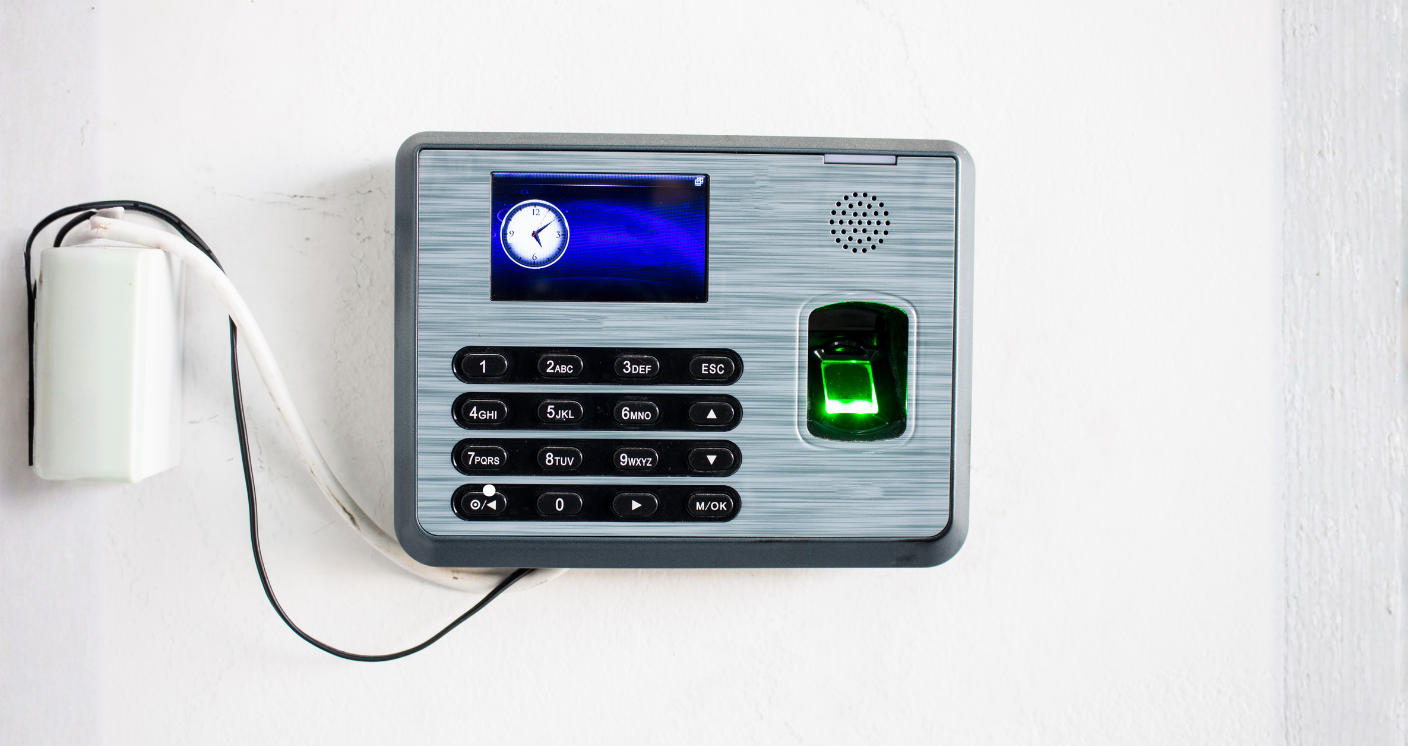
Size the gate for the peak, not the average. That usually means several readers rather than one clever one, a turnstile or lane arrangement that physically prevents two people passing on one credential, and a documented fallback for the worker whose finger will not read — because on a dusty site with worn hands, fingerprint readers fail daily. Face recognition or a card with a PIN handles that without marking someone absent who is standing in front of you.
Where cameras belong — and where they must not go
This is the part most proposals skip, and the part we insist on writing down before installation.
Cameras belong at vehicle and pedestrian gates, along the perimeter, at store rooms and equipment yards, at the kitchen and dining entrances, and in corridors and stairwells.
Cameras do not belong inside sleeping rooms, in bathrooms and washing areas, in prayer rooms, or anywhere a resident reasonably expects privacy. A compound is where these men live. A system that watches people sleeping is not a security system; it is a liability, it destroys trust with the workforce, and it will be the first thing raised against the operator when something goes wrong.
Write the camera positions and their justification into the handover document, and have whoever signs for the site sign for that list too.
Duty of care, not surveillance
The strongest business case here is not catching people. It is being able to account for them.
If an operator can produce an accurate headcount during an evacuation, show that a visitor was escorted, or retrieve the footage that clears a worker wrongly accused, that is what the system is worth. Qatar’s labour framework is administered by the Ministry of Labour, and accommodation standards are inspected — but note carefully: we are not aware of any requirement that obliges you to install cameras or access control in worker accommodation, and any supplier who tells you the law demands it is selling you something. Install it because you can answer for the people in your care, not because you were told you must.
What breaks here that does not break in an office
- Dust and heat. Outdoor enclosures and gate readers in Qatar live in conditions an office device never sees. Ask what the rating is and where the device is actually mounted — shaded, or in full afternoon sun on a west wall?
- Power. Compounds lose power. Decide in advance which doors fail open and which fail locked, write it down, and test it before handover — during an evacuation this is not a detail.
- Network. Buildings spread across a plot need real cabling or a properly planned wireless link. A recorder that loses half its cameras when it rains was a cabling decision, not a camera decision.
- Nobody owns it. The most common failure we are called to fix is a system that worked for a year and then drifted: exits never recorded, a camera pointing at a wall since someone bumped it, footage that stopped writing in March. Name one person per compound who checks weekly, and give them a report that shows only the exceptions.
A checklist before you buy access control and CCTV for labour accommodation in Qatar
- How many people pass this gate in the busiest ten minutes?
- What is the fallback when a credential fails, and who authorises it?
- How many days of footage must we be able to go back to, and who set that number?
- Which doors fail open on power loss? Show me it tested.
- Can I produce a headcount in under two minutes without a spreadsheet?
- Where exactly is every camera pointed, and is that list in the handover file?
Where to start
Tell us how many residents the compound holds, how many gates it has, and how many people cross the busiest one at shift change. Those three numbers decide most of the design. We survey the site, put the camera positions and the privacy exclusions in writing before anything is ordered, and quote it line by line.
More on the equipment on our CCTV and surveillance and attendance and access control pages, on the network these systems depend on under structured cabling, and on making them work together in integrated security systems in Qatar. Or talk to us.