
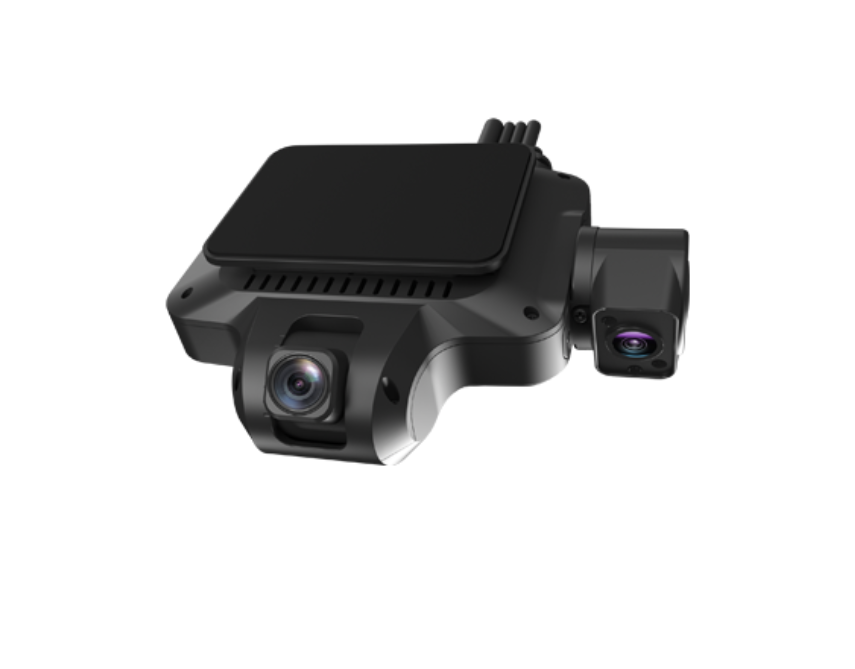
How a Dash Camera Protects the Driver in Qatar
Every conversation about fitting cameras starts from the company’s side: our claims, our costs, our liability. The driver hears one thing in all of it — they do not trust me.
Which is a shame, because in our experience the person the footage saves most often is the driver. Understanding how a dash camera protects the driver in Qatar is not a soft point to put in a presentation. It is the difference between a fleet where the cameras work and one where they are quietly unplugged.
Four times the camera was on the driver’s side
The accident he did not cause
Someone changes lane without looking, there is contact, and both drivers step out with a different account. Without footage this comes down to whose story is told more confidently, and a driver who speaks the local language less well is at a disadvantage that has nothing to do with what happened. With footage, the question is settled and his record stays clean.
The complaint that was not true
A call reaches the office: your driver was on the phone, or cut someone off, or was rude at a delivery. Some of these are true and worth acting on. Many are not, and without a record the driver has no way to answer — the accusation simply sits in his file. Thirty seconds of video answers it either way, and “either way” is the honest part: sometimes it confirms the complaint, and that is also fair.
The damage that was already there
He takes a vehicle at six in the morning and is asked about a dent at four in the afternoon. Continuous recording from the start of the shift shows what the vehicle looked like when he took it. This is one of the most common disputes in any fleet, and it is almost always resolved in the driver’s favour once someone bothers to look.
The route he actually drove
He is accused of a long detour, or of stopping somewhere he should not have. The record shows the traffic closure that forced the diversion, or the twenty minutes he spent waiting at a gate for someone to open it. Drivers get blamed for delays that were never theirs more often than most managers realise.
What the company owes the driver in return
A camera pointed at a person all day is a serious thing. If you fit one, these are not optional:
- Tell them before it is fitted, not after. Explain what it records, what it does not, and why. A driver who discovers a camera has been watching him for a month will never trust anything else you say about it.
- Show them their own footage. A driver who has seen what the camera actually captures stops imagining something worse. This single step removes most of the resistance we encounter.
- Do not use it only against people. If footage is pulled to discipline but never to clear someone, the drivers will work that out within weeks, and you will have a fleet of cameras that everybody works around.
- Name who can watch, and how long clips are kept. “Anybody with the password, forever” is not a policy. Write down the retention period and the access list, and keep to them.
- Keep the lens out of private moments. A cab is a workplace during the shift. If your vehicles have sleeping berths, or drivers take breaks in them, the inward camera has no business recording that.
How a dash camera protects the driver in Qatar: what to put in writing
One page, given to every driver, signed, and kept with his file. It should say:
- What the cameras record — forward, cabin, or both — and when they are running.
- How many days footage is kept, and what happens to it after that.
- Who is allowed to view it, by role rather than by name.
- That a driver may request footage of an incident involving him, and how.
- That footage will be reviewed before any decision is made about him, not after.
Point four is the one most companies leave out, and it is the one that changes how drivers feel about the whole system. A driver who knows he can ask for the clip is a driver who sees the camera as a witness rather than a supervisor.
The honest limits
We are not going to pretend the camera is on the driver’s side every time:
- It will sometimes show he was at fault. That is what a record is. A driver who is told the camera exists to protect him, and then finds it used to prove he was speeding, will feel he was misled — so do not oversell it. Say plainly: it records what happened, whichever way that goes.
- It does not replace the official process. Reports still go to the Ministry of Interior, and footage is evidence brought to that process, not a substitute for it.
- It cannot see everything. A forward camera sees roughly what the driver saw. It does not see the vehicle that hit you from the side, and it does not prove intent.
- It is useless if the clip is gone. A driver who asks for footage from eleven days ago and is told it was overwritten learns that the system was never really for him.
Where to start
Before you buy anything, write the one-page policy above and read it to your drivers. If you cannot commit to point three and point four, fit the cameras anyway — but do not tell the drivers it is for their protection, because they will find out.
Then tell us how many vehicles you run, whether you need the inward camera as well as the forward one, and how many days of footage you must keep. We fit, we test playback vehicle by vehicle, and we will sit with your drivers and show them what the camera sees if that helps.
More on the hardware on our dash cameras page, on the company-side case in benefits of dash cameras for businesses in Qatar, on the inward-facing camera in driver fatigue monitoring, and on choosing a model in how to choose a dash camera for your fleet. Or talk to us.