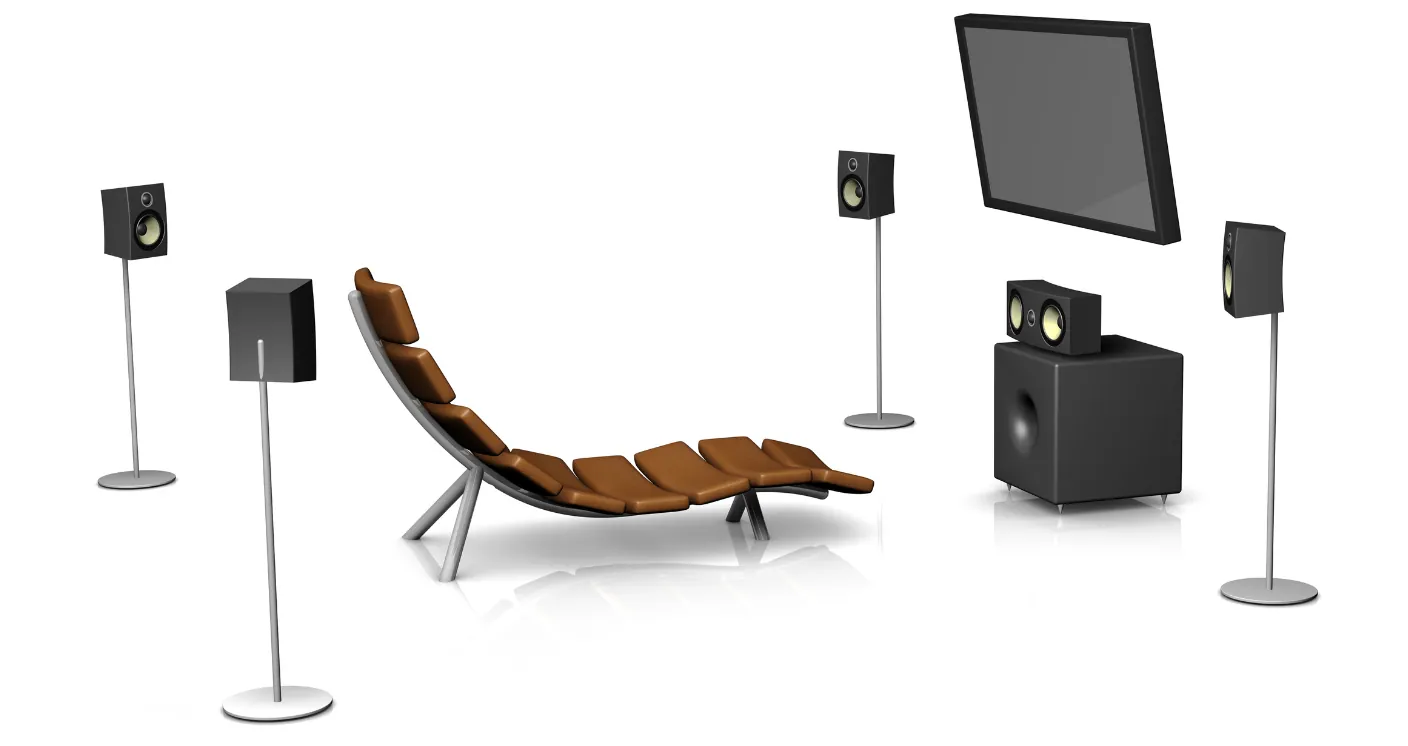
Sound System Installation in Qatar, From One Room to a Building
Pixels Technology provides custom-designed commercial Sound Systems, essential for effective public address (PA), background music distribution, and integrated security communication within any facility.
Public Address & Paging (PA)
Designing high-quality sound distribution networks for clear and reliable broadcasting of announcements and emergency alerts across large areas.
Background Music (BGM)
Installing discreet, high-fidelity sound systems tailored to create a pleasant and relaxing ambiance in offices, hotels, or retail spaces.
Integrated Audio Monitoring
Utilizing advanced microphones and speakers that integrate with CCTV and Intercom systems to enable two-way audio verification and security monitoring.
Full Project Control: From Design to Tuning
We offer a complete end-to-end service for sound systems, ensuring optimal acoustics and perfect integration with your existing security and communication infrastructure.
- Acoustic Environment Design
- Premium Hardware Supply
- Integrated Wiring and Calibration
- Emergency Override Functionality
Working Hours
Sat – Wed: 8:00 AM – 5:00 PM
Thursday: 8:00 AM – 5:00 PM
Friday: Closed

Call to ask any question
44212322
Sound system installation in Qatar, from a single room to a whole building
A sound system is judged in one second, by whether people can understand what is being said. Most systems that fail that test do not fail because the equipment was cheap. They fail because too few speakers were installed too far apart, and the volume was raised to compensate. Pixels Technology designs and installs sound systems in Qatar for mosques, halls, hotels, offices, retail spaces, schools and outdoor areas, with the speaker layout worked out before anything is bought.
What we install
- Ceiling speakers for offices, corridors, retail and hotel public areas, spaced so coverage is even and nobody sits directly under a loud one while the next person hears nothing.
- Wall and column speakers for halls, prayer areas and rooms with high ceilings, where a vertical pattern carries speech further with less reflection.
- Horn speakers for outdoor areas, yards, car parks and industrial spaces where announcements must cut through background noise.
- Amplifiers sized for the load with headroom, so the system is never run at its limit.
- Mixers and digital processors for venues with several inputs, giving each microphone and source its own settings.
- Microphones, wired and wireless, chosen for the room and for how they will be handled in practice.
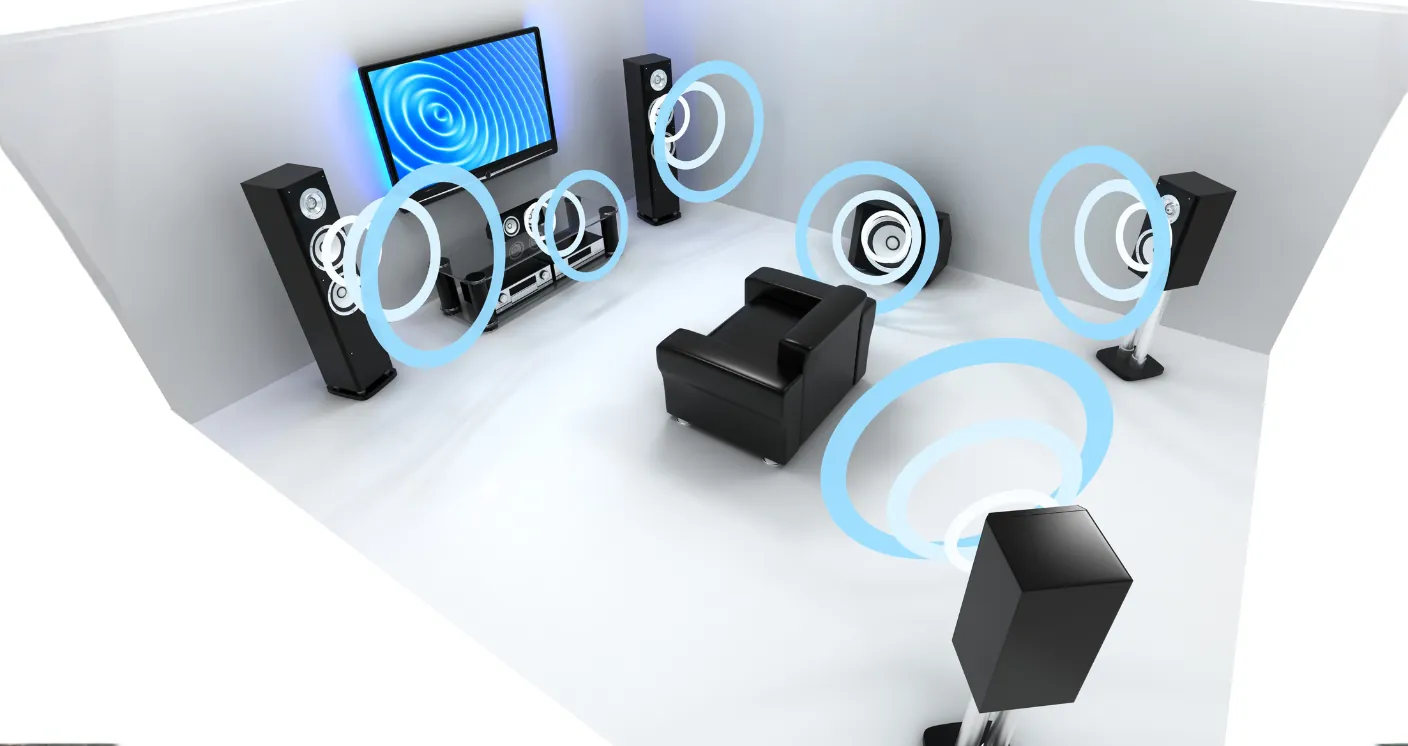
- Zone control, so background music plays in the lobby while an announcement goes only to the floor that needs it.
- Background music sources, from a streaming player, a local media source or the building’s own content.
100 volt line or low impedance, explained plainly
For a building with many speakers spread over distance, a 100 volt line system is the right answer. The speakers carry small transformers and can be tapped to different power levels, cable runs are long without losses becoming a problem, and adding a speaker later is straightforward. For a hall or auditorium where a few speakers must deliver full-range sound at high quality, a low impedance system is better. Many buildings need both: a 100 volt line system for announcements and background music throughout, and a low impedance system for the main hall. We will tell you which parts of your building need which, and why.
Venues we work in
- Mosques and prayer halls, where clarity of speech is the entire requirement and reflections from hard surfaces are the main enemy.
- Function and conference halls, with microphones, sources and the ability to run an event without a technician hovering over the mixer.
- Hotels, where background music, zone control and paging have to coexist quietly and reliably.
- Offices, where the system is mostly invisible until it is needed for an announcement.
- Retail, where music supports the space rather than shouting over it.
- Schools, with classroom announcements, bells and assembly sound.
- Outdoor areas and yards, using weatherproof speakers rated for Qatar’s summer.
The room matters more than the brochure
Marble floors, glass walls and high ceilings look excellent and behave badly. Sound reflects, arrives twice, and speech turns to mush long before it turns quiet. The fixes are unglamorous and they work: more speakers at lower volume rather than fewer at high volume, speakers aimed at people rather than at the opposite wall, and processing used to tame the frequencies a room exaggerates. Where a room needs acoustic treatment to succeed, we will say so rather than sell more amplification into a problem amplification cannot solve.
Feedback, the squeal every event organiser dreads, is usually a layout problem too: a microphone standing in front of a speaker. We position speakers so the presenter is behind the sound, set gain properly at commissioning, and where needed use processing to hold the margin.
Announcements and paging
Many buildings need a public address capability: paging from reception, announcements to a floor, or a general call across a site. We design the zones, the priority rules and the microphone stations so an announcement interrupts music cleanly and reaches the right area. If your building has a specific life-safety or evacuation requirement, bring it to the survey with the consultant’s specification, and we will design and quote against that document rather than around it.
How a project runs
Survey. We visit the space, measure it, listen to it and ask how it is used. A hall used for lectures is a different problem from the same hall used for live music.
Design. You receive a speaker layout, amplifier and processor specification, cabling, and the zones the system will provide.
Installation. Speakers and cabling first, then the rack, then the sources and microphones. Cable is run in containment, labelled and terminated properly, the same way we run structured cabling.
Commissioning. Levels are set, zones are verified, processing is tuned in the actual room, and the system is tested with a real voice at the far corner rather than with a test tone at the rack.
Training and support. Your team is shown how to run an event, what the presets do, and what to check before calling us.
Frequently asked questions
How many speakers does a hall need?
It depends on ceiling height, the surfaces and what the room is used for. A layout is calculated rather than guessed, and the answer is usually more speakers at lower volume than clients expect.
Can we use the system for both music and speech?
Yes, with the right speakers and processing, and with presets so the operator does not have to re-tune the system for each use.
Can I control it from a phone or tablet?
Most modern systems support it for volume, zone and source selection. We configure it and lock the settings that should not change.
Do wireless microphones work reliably here?
Yes, when the frequencies are chosen with the local environment in mind and the receiver is placed sensibly. Cheap unmanaged wireless in a crowded building is where most problems come from.
Can you extend an existing system?
Often. It depends on the amplifier’s remaining capacity and the type of system. We will assess it honestly rather than automatically proposing a replacement.
Do outdoor speakers survive Qatar’s summer?
Weatherproof models rated for the conditions do. Indoor speakers put outside do not, and they fail in a way that also damages the amplifier.
What maintenance is needed?
Little for the speakers, more for the moving parts of an event system: microphone batteries, connectors and cables. A maintenance visit before a major event season is usually enough.
Can you integrate with our other systems?
Yes. The same team installs CCTV, attendance and access control and IPTV, so a rack, a riser and a maintenance visit can cover all of them.
Ask for a site visit
Tell us the space and how it is used, and we will visit, listen and propose a system sized for the room. Call 4421 2322 or 6624 0400, email info@pixelsqa.com, or use the contact page. Saturday to Thursday, 8:00 AM to 5:00 PM, Al Mirqab Mall, Block B, Second Floor, Office 205, Doha.
What we would install, space by space
A mosque or prayer hall
Speech clarity is the whole requirement, and hard surfaces are the obstacle. We use more speakers at lower volume, positioned so sound reaches worshippers directly rather than bouncing off marble and returning a moment later. The imam’s microphone is chosen for consistency rather than sensitivity, gain is set with margin against feedback, and outdoor horn speakers are added where the courtyard is used at peak times. The system is set up so it can be switched on by anyone, without a technician adjusting anything.
A function or conference hall
A low impedance system for the main coverage, with a mixer and processing in a lockable rack, wired and wireless microphones, and presets for the two or three ways the hall is actually used. The aim is that an event organiser can select a preset and run the evening without help, and that an engineer plugging in their own equipment finds a sensible input panel rather than a tangle.
A hotel
Zoned background music across lobby, restaurant, corridors and pool, each with its own level, plus paging that interrupts cleanly and reaches only the zone that needs it. Volume limits are set so a well-meaning member of staff cannot turn the lobby into a nightclub at nine in the morning.
An office or showroom
Ceiling speakers spread evenly for music and announcements, with the rack in the comms room next to the network equipment. Simple, quiet, and invisible until needed.
A warehouse or yard
Horn speakers with enough output to be understood above machinery, aimed along working areas rather than across them, and zoned so an announcement to the yard does not deafen the office.
Microphones, and why events go wrong
Most event failures trace back to three things: a wireless microphone with a flat battery, a channel interfering with another device in the building, and a presenter standing in front of a speaker. The fixes are procedural as much as technical. We select wireless systems with reliable frequency management, label channels clearly, provide a charging position that becomes part of the routine, and place speakers so the presenter is behind the sound. We also show your team the five-minute check to run before an event: batteries, levels, a word into each microphone, and a walk to the back of the room to listen.
Working with the building’s other systems
Sound rarely arrives alone. The rack that holds the amplifier usually also holds network equipment, and the cable route to the ceiling speaker often runs beside the one feeding a camera or an access control reader. Where a building has IPTV, the audio from a screen and the paging system need a deliberate relationship rather than an accidental one. Planning these together is cheaper and tidier than discovering the conflict during second fix.
What drives the cost
Three things. The number of speakers, which is driven by the size and shape of the space rather than by preference. The amplification and processing, which depends on how many zones and sources you need. And the installation, which is mostly cable: a ceiling with easy access costs a fraction of one that requires working around finished surfaces. Microphones and event equipment are usually a smaller share of the total than clients expect, which is why we spend the budget on coverage first.
Before you buy a sound system
- Ask for a speaker layout, not just an equipment list. The layout is the design.
- Ask what happens if the room is full: a system tuned in an empty hall behaves differently with three hundred people absorbing sound.
- Ask who sets it up for an event and how simple that process is.
- Ask whether announcements can reach only one area, and whether that matters to you.
- Ask what is warranted, and who returns when a speaker fails in the middle of a season.
Terms you will meet in a quotation
- 100 volt line: a distribution method that uses small transformers on each speaker, ideal for many speakers spread over distance.
- Low impedance: direct amplifier-to-speaker connection, used where full-range quality matters over shorter runs.
- Tapping: setting how much power an individual speaker draws on a 100 volt line, which is how coverage is balanced room by room.
- Zone: an area that can receive its own source and volume, such as a lobby, a restaurant or a floor.
- DSP: digital processing that corrects the room, protects the speakers and holds presets for different uses.
- Headroom: the margin between normal operating level and the system’s limit. Systems without it distort at exactly the wrong moment.
- Feedback margin: how much microphone gain is available before the system squeals, decided mostly by speaker and microphone placement.
A maintenance schedule that prevents surprises
Twice a year suits most venues, and once before the busy season is the minimum. A visit covers amplifier and processor health, a physical check of every speaker including the ones nobody has heard in months, microphone and battery condition, connector integrity at the stage box and wall plates, and a listening test in the room at the levels the venue actually uses. Presets are verified, because a preset someone adjusted during an event and never restored is one of the most common causes of a system that sounds wrong for months.
Event day checklist for your team
- Power on the rack first and the amplifiers last, and reverse the order when shutting down.
- Fit fresh batteries in every wireless microphone that will be used, not just the main one.
- Select the correct preset for the type of event before anyone speaks into a microphone.
- Test each microphone with a normal speaking voice, not a tap on the grille.
- Walk to the furthest seat and listen. If speech is unclear there, adjust before the room fills.
- Set the master level, then leave it. Late adjustments during a speech are what create feedback.
We print this as a short card and leave it at the rack during handover, because the person running the system on the night is often not the person who was trained.
What to send us for a quotation
Room dimensions and ceiling height, the surfaces, how the space is used and how many people it holds. If there is an existing system, tell us what it does badly: too quiet at the back, unclear speech, feedback, or areas with no coverage at all. Each of those points to a different fix, and naming the symptom saves a visit.
Can you supply equipment for a single event?
Our focus is installed systems rather than event hire, but we will tell you honestly when hire is the better answer for a one-off, and we can design an installed system that removes the need for hire in future.
How soon can you visit?
Usually within a few days for a site visit anywhere in Qatar. Tell us when the space is free and quiet, because listening to an empty room is part of the survey.
LOCATION
Doha, Al Mirqab Mall Block B, 2nd floor, office 205
WORKING HOURS
Sat – Thu: 8:00 AM – 5:00 PM
Friday: Closed
CONTACT
info@pixelsqa.com
44212322 - 66240400